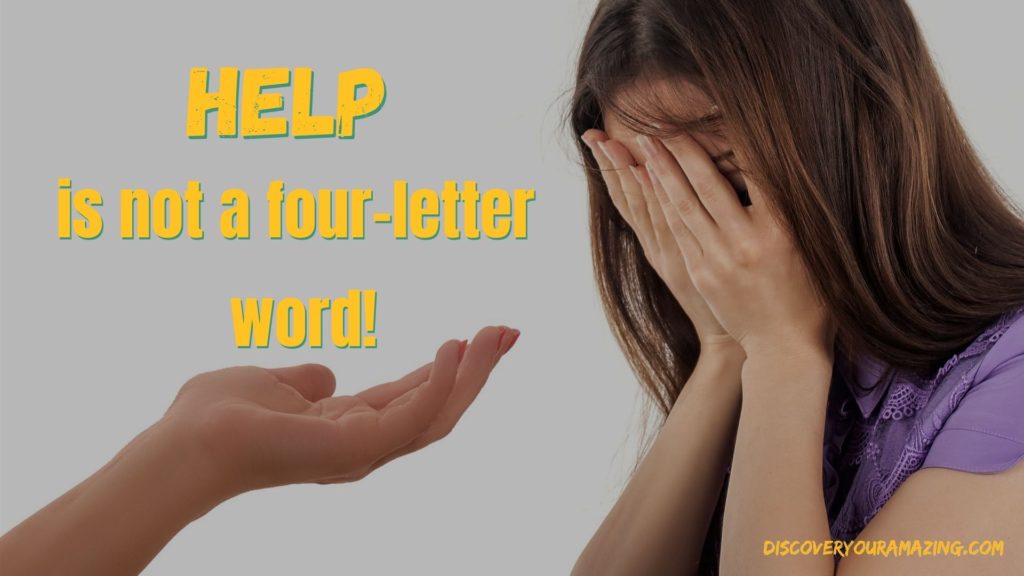
Do you know what three-word phrase is one of the hardest in the English language to say out loud?
“I need help.”
I’m not talking about seeking information or recommendations. I see those requests all the time.
“Hey, anybody know a good, realizable, cheap A/C repair company?”
I’m talking about admitting that I am over my head. I’m lonely. I’m hurting. I’m at my wit’s end. I don’t know if I can continue. This is more than I can handle.
A friend recently polled his Facebook connections with this query:
True confessions. Which is harder for you to say?
- I’m sorry.
- I need help.
- I love you.
One hundred sixty-eight people responded to his poll. Of those responses, one hundred forty (including yours truly) responded B.
That’s a whopping 83 percent!
Now, I understand that this is not scientific research, but even anecdotal research at 83% is significant and we can draw some informed conclusions.
I would like to be able to say that I’m surprised by those results, but I’m not.
What I am is saddened that my suspicions were confirmed.
I think we have culturally created people who know how to be independently polite while resisting the necessary vulnerability that is required to create authentic expressions of community.
I think we have culturally created people who know how to be independently polite while resisting the necessary vulnerability that is required to create authentic expressions of community. Share on X
We value independence above interdependence because we are afraid of being perceived as dependent.
Another unscientific observation is that the most common answer to an expressed need is “You’ve got this!”
We are—in general—much more comfortable telling people “I’m sorry you are struggling” and “I love you” than we are affirming their courage to admit that they are drowning and offer them a lifeline.
And the inconvenient and uncomfortable truth is that our independence and neglect of a “community” ethic means that we reinforce the idea that admitting our need is a sign of weakness or neediness.
The inconvenient and uncomfortable truth is that our independence and neglect of a “community” ethic means that we reinforce the idea that admitting our need is a sign of weakness or neediness. Share on X
Therefore, in times of legitimate need of mutually beneficial connections, our fear of being seen as weak or needy can lead us to self-isolate and go deeper into the pit of quiet, lonely, desperation.
There is a huge difference between an intentional season of purposeful solitude with God and an extended season of lonely isolation.
One is life giving; the other steals our vitality.
Author and counselor Neil Anderson says,
“Temptation is greatest when hunger, fatigue, and loneliness are acute.”
In other words, we are more likely to engage in activities that a personally harmful when we are physically and relationally depleted.
Genesis 2:18 says,
“Then the LORD God said, ‘It is not good for the man to be alone.’”
This is not simply a description of the creation account, but it is a statement of an eternal principle: We are hard-wired for relationship.
In the New Testament, the phrase “one another” appears more than 140 times. Sometimes it is descriptive—this is what happened. Sometimes it is prescriptive—this is what should happen.
One way to live into the amazing life that God intends for us is to realize that the word “help” has four letters, but it is not a “four-letter” word (that’s a slang term for cussin’, just in case you didn’t know).
We need each other—not just in times of crisis, but every day.
Be amazing today, my friend.
